
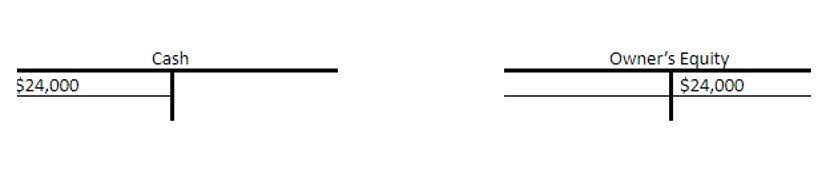
Any fees for professional services, assets = liabilities + equity and any transaction costs, incurred by parties to a transaction with respect to which any portion of the gain or loss is not recognized under part III of subchapter C. For purposes of subparagraph (A), the term “computer software” means any program designed to cause a computer to perform a desired function. Such term shall not include any data base or similar item unless the data base or item is in the public domain and is incidental to the operation of otherwise qualifying computer software. In addition, start-up and organizational costs are expensed as incurred, rather than capitalized. Quickonomics provides free access to education on economic topics to everyone around the world. Our mission is to empower people to make better decisions for their personal success and the benefit of society.
Business Tax Services
The percentage of the total value of the S&P 500 index derived from intangible assets as of July 2020, according to a “Study of Intangible Asset Market Value” by management consultants Ocean Tomo. Examples of typical tangible assets include machinery or manufacturing plants. Additionally, financial assets such as stocks and bonds, which derive their value from contractual claims, are considered tangible. Invisible assets cannot be held, seen, or felt and they are often difficult to slap an accurate price tag on. Tangibles, meanwhile, usually have a physical form or at least a finite or recorded monetary value.
Invest in Branding and Marketing
- Intangible assets are generally both nonphysical and noncurrent; they appear in a separate long-term section of the balance sheet entitled “Intangible assets”.
- Invisible assets cannot be held, seen, or felt and they are often difficult to slap an accurate price tag on.
- Even though an intangible asset, such as Apple’s logo, carries huge name recognition value, it does not appear on the company’s balance sheet because it was internally developed.
- In addition to providing benefits, a franchise usually places certain restrictions on the franchisee.
- In other words, Amortization refers to the systematic allocation of the cost of the Intangible Asset as an expense over its useful life.
The first step is the recoverability test, comparing the asset’s carrying value to the undiscounted future cash flows expected from its use. If the carrying value is less than the cash flows, no impairment is recognized. Furthermore, you do not amortize the intangible assets having indefinite useful life. Besides, you also have to review the useful life of such assets in each accounting period. This is done to know if the conditions exist for these types of intangible assets to have an indefinite useful life. Therefore, intangible assets are resources that do not have a physical existence.
Goodwill, Patents, and Other Intangible Assets

Physical assets include tangible, physical, touchable things of value such as buildings, machinery, and hardware. Triggering events can include a significant decline in stock price, adverse changes in the business environment, or a forecast of continuing losses. Testing procedures vary significantly based on whether the asset has a finite life or an indefinite life.
Companies may also claim aspects of their business related to customer relations as part of the company’s intangible assets. One form of customer-related assets are customer lists or databases of customer identities and preferences purchased by some companies to help in building a customer base. The sale of customer lists is a standard practice in many industries, but is sometimes considered controversial as it may violate privacy. Understanding the intricacies of intangible assets can help investors and financial professionals make informed decisions when analyzing potential investments or assessing a company’s overall financial health. In the next section, we delve deeper into understanding the valuation process for intangible assets and provide real-life examples to illustrate their importance in finance and investment.
Why are intangibles important?
However, there are a few methods companies can https://www.bookstime.com/ use to estimate the value of their intangible assets. Research and development (R&D) costs are typically expensed as incurred, rather than being recorded as an intangible asset on the Balance Sheet. This is because R&D costs do not have a direct and determinable future economic benefit, which is a key criterion for recognizing an asset on the balance sheet. While “goodwill” and “intangible assets” are sometimes used interchangeably, there are significant differences between the two terms in the accounting world. However, many factors separate goodwill from other intangible assets, and the two terms represent separate line items on a balance sheet. A definite or indefinite category can be applied to an intangible asset.
- Tangible assets are physical properties, including real estate, equipment, monetary holdings, and staff.
- Brand equity, an intangible asset, is the extra value a company earns from a recognized product over a generic one, often built through marketing campaigns.
- Internally developed intangible assets do not appear on a company’s balance sheet.
- Besides, you also have to review the useful life of such assets in each accounting period.
- This assessment ensures that the carrying value of goodwill remains no more than its recoverable amount.
Accounting Basics: “Intangible Assets” Fundamentals Quiz
Now, you can choose between two methods to measure the intangible assets post the acquisition. Accordingly, expenditure incurred on an intangible asset not satisfying the intangible assets definition and recognition intangible assets do not include criteria is included in Goodwill. This Goodwill is identified at the time of the acquisition of such an asset. Furthermore, the possibility of future economic returns flowing from such intangible assets must depend on valid assumptions.
In other words, intangible assets represented on your balance sheet are either acquired as a part of the Business Combination. While PP&E is depreciated, intangible assets are amortized (except for goodwill). Generally, intangible assets are simply amortized using the straight-line expense method. Intangible assets with infinite life (versus finite life), including goodwill, are not amortized systematically. Instead, they are included on the balance sheet, as Apple has done, and periodically reviewed for impairment. Even though an intangible asset, such as Apple’s logo, carries huge name recognition value, it does not appear on the company’s balance sheet because it was internally developed.
